SupaTrak Vehicle Tracking
- Cost effective vehicle tracking from 52p per vehicle per day
- Provides total fleet visibility
- Manage your fleet efficiently and productively
- Comply with duty of care and obligations
- Reduce fuel costs
- Secure your assets
- Timesheet management
Fuel plays a primary role within the transport and logistics industry, accounting for approximately 30 per cent of operational costs. Fleet managers and business owners across the country are all under pressure to find solutions to reduce their expenditure and the control of fuel costs is an important place to start.
CMS SupaTrak Ltd have developed a portfolio of fuel saving technology solutions in conjunction with the haulage industry to provide some relief to the businesses being stretched in this economic climate.
By monitoring and managing driver behaviour and educating drivers to demonstrate more effecient driving styles, it is possible to increase the miles per gallon that your fleet achieves and ultimately reduce fuel costs and carbon emissions. Read More...
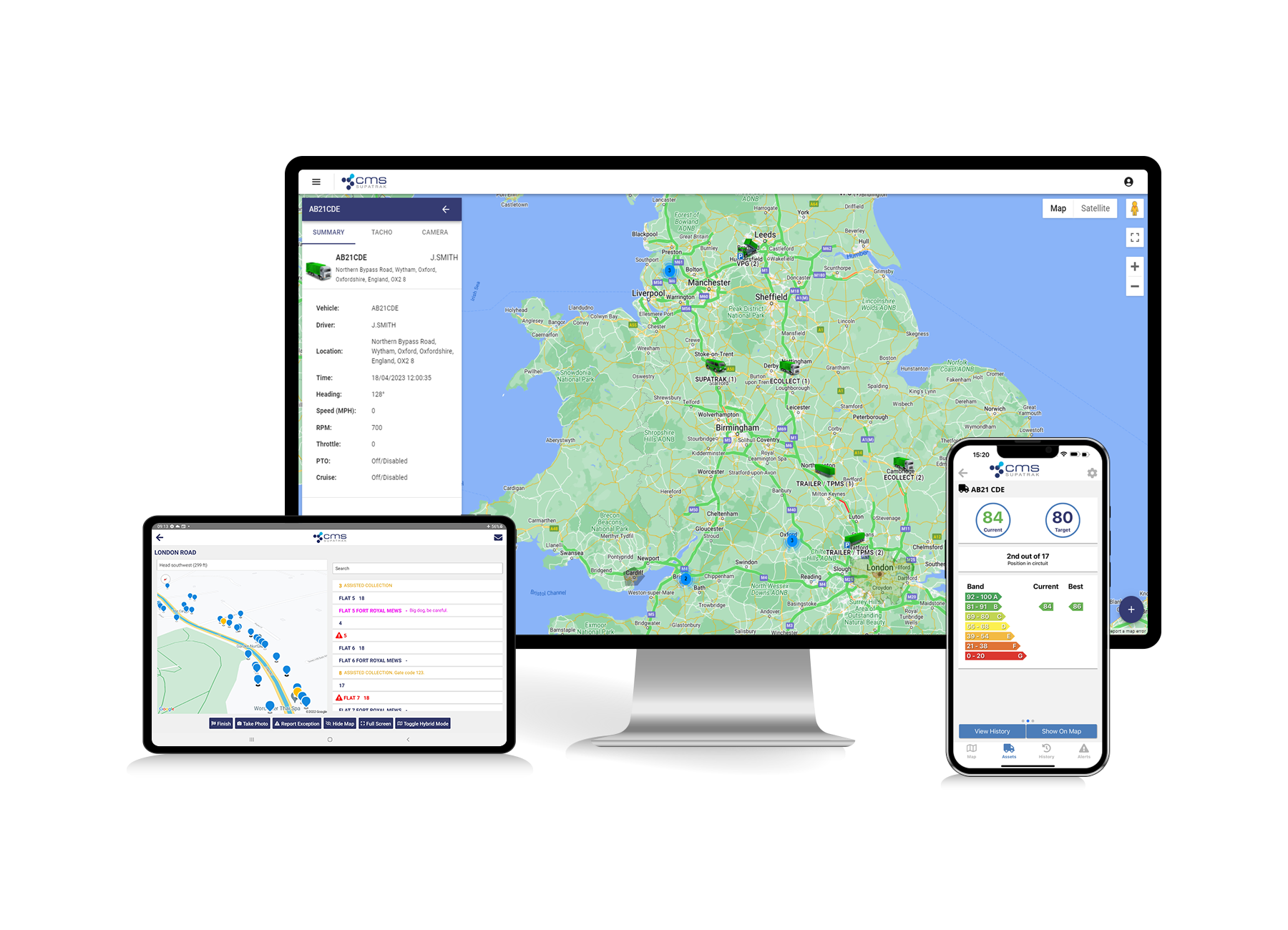
SupaTrak is a simple to use, low cost vehicle tracking solution which is easy to install and scaleable to any size of organisation.
Starting from only 52 pence per vehicle per
day.
SupaTrak offers 60 second updates as
standard and ensures your fleet is visible on
our web based mapping solution 24/7/365,
with no hidden costs.
SupaTrak can be easily integrated to interface with back office data feeds and our other fleet management solutions.
All SupaTrak customers receive technical support 24/7/365 provided by our in-house support team.
Adopting a smarter driving style means
driving more efficiently and saving fuel
whilst reducing carbon emissions.
By
following a few simple steps, it is possible
to reduce your fuel costs by up to 10%.
Don’t over rev the vehicle change gear before 2,500rpm (petrol) and 2,000rpm (diesel).
Cruise control Where possible, utilise cruise set to vehicle’s optimum driving range.
Don’t be idle engine idling is an unnecessary cost and can equate to the use of 2 litres of fuel per hour.